Your video game takes shape
Create your GDD as you design your video game
Start with your idea in Mainloop. Learn by doing and use AI whenever it helps.
Free trial: your first game with AI + 2 requests or changes within that game. For new accounts with a verified email, no card required.
- Essentials
- Story
- Systems
- Mechanics
- Characters
- Loops
- Puzzles
- Audio












What a GDD is
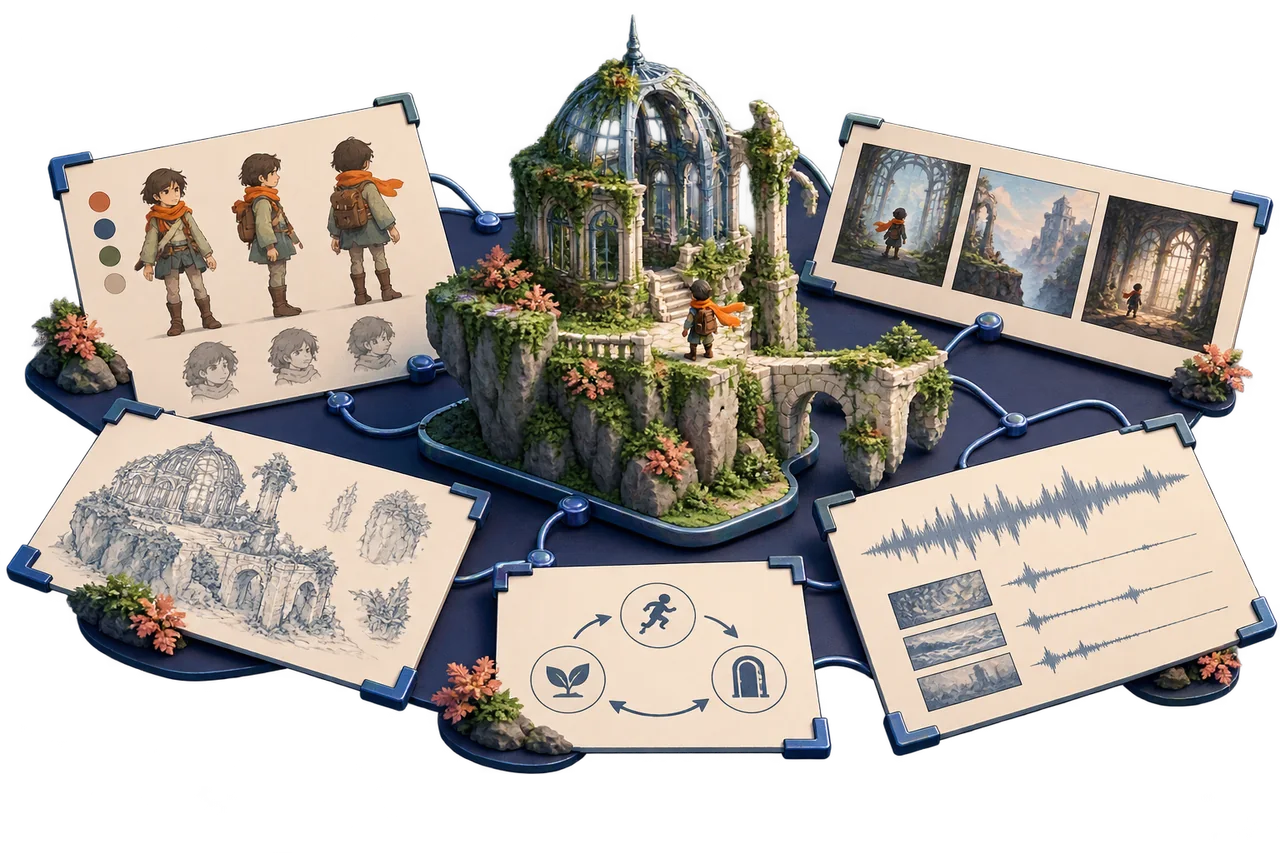
A Game Design Document is the source of truth for a game's design. It organizes the core idea, intended experience, pillars, mechanics, systems, progression, narrative when relevant, and the decisions the team needs to understand before building the game.
What an LDD is
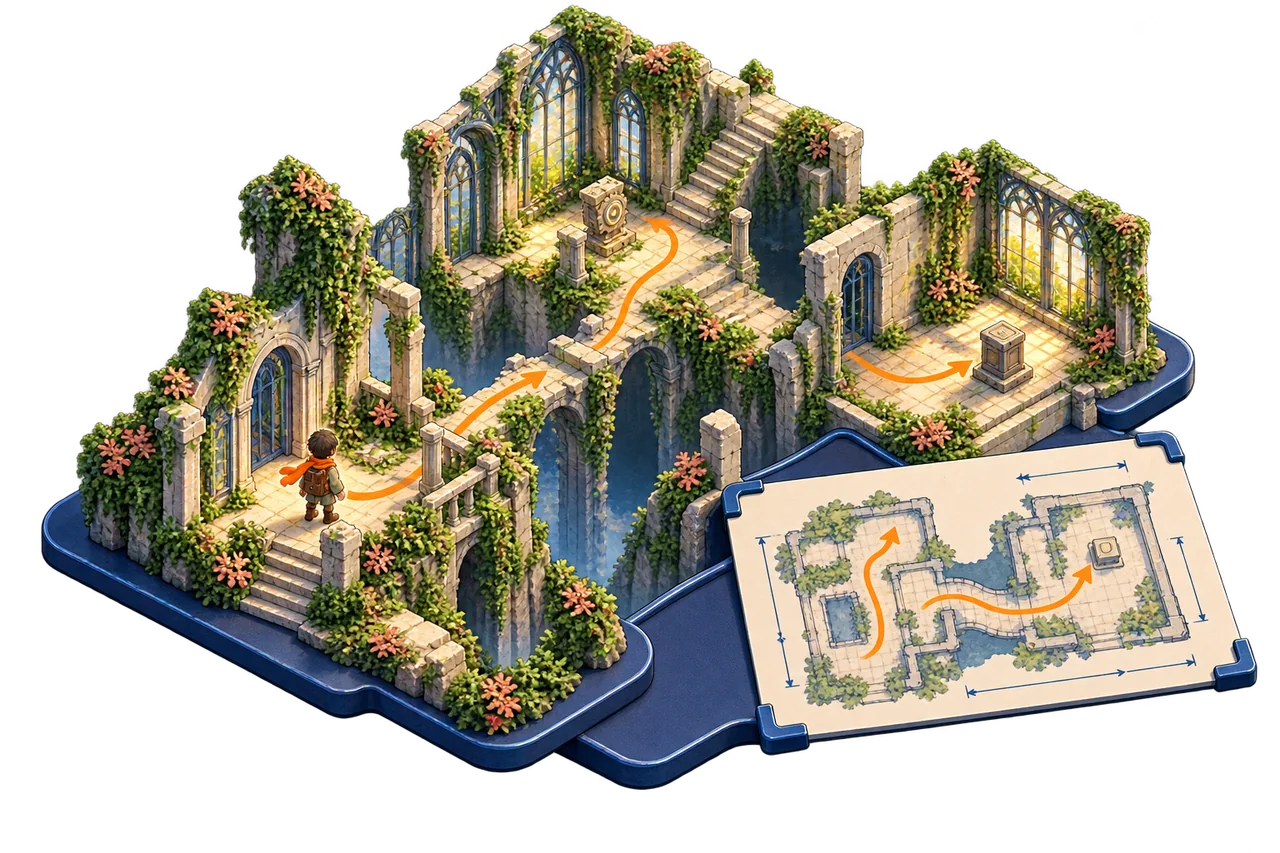
A Level Design Document brings that vision into a concrete playable space. It explains what a level or area must achieve, how it is navigated, which mechanics it teaches or combines, what pacing it creates, what risks it has, and how it connects to the broader GDD.
Difference between a GDD and an LDD
- The GDD defines the whole game: vision, rules, systems, loops, and global decisions.
- The LDD defines a specific playable part: level goal, layout, pacing, routes, challenges, and spatial validation.
- The GDD answers what game we are making and why it works.
- The LDD answers how that idea is experienced in a concrete level, area, puzzle, or sequence.
- A useful LDD stays connected to the GDD so its levels support the overall game design.
GDD structure
A practical structure for documenting your GDD without overdocumenting.
- 01
Define the foundation
High concept, core fantasy, target player, tone, genre, design pillars and intended player experience.
- 02
Organize the loop
What the player does, why they repeat it, how progression changes it, and what feedback they receive.
- 03
Turn ideas into rules
Each important mechanic needs actions, limits, costs, rewards, states, and feedback.
- 04
Connect systems
Progression, economy, combat, resources, abilities, inventory, or any system that affects another.
- 05
Document levels
Goal, intent, initial layout, routes, pacing, difficulty, rewards, risks, and relationship with the GDD.
- 06
Review open decisions
The document should also show open questions, risks and parts that still need validation.
GDD and LDD template
A copyable template for starting your GDD and LDD. Copy the template and replace each instruction in brackets. If a section does not apply yet, mark it as an open decision instead of inventing an answer.
# GDD — [Game name]

## 1. Game summary
- High concept: [One sentence that explains the game]
- Genre and platform: [Genre] · [Platform]
- Target player: [Who it is for]
- Core fantasy: [What the player should feel or be able to do]
- Current scope: [Prototype, vertical slice, production]

## 2. Design pillars
1. [Pillar and concrete criterion]
2. [Pillar and concrete criterion]
3. [Pillar and concrete criterion]

## 3. Core loop
1. [Main action]
2. [Outcome or reward]
3. [Upgrade or progression decision]
4. [What drives repetition]

## 4. Mechanics and rules
### [Mechanic]
- Player action: [What they do]
- Rules and limits: [What they can and cannot do]
- Costs and rewards: [What they risk or gain]
- Feedback: [How they understand the result]
- Related systems: [What other parts it affects]

## 5. Systems
### [System]
- Goal: [Why it exists]
- Inputs and outputs: [Resources, states, results]
- Dependencies: [Which mechanics or systems it connects]
- Risks or questions: [What still needs validation]

## 6. LDD — [Level name]
- Level goal: [What the player must achieve]
- Intent: [What it teaches, combines, or tests]
- Start and end: [Entry and exit state]
- Route and zones: [Main route, alternatives, key points]
- Mechanics used: [List]
- Pacing and difficulty: [How they escalate]
- Rewards: [What the player gains]
- Design risks: [What must be tested]

## 7. Open decisions
- [Question] — Owner: [Name] — Next test: [Action]

## 8. Next tasks
- [Task] — Owner: [Name] — Status: [Pending/In progress/Done]Review your GDD
A documentation review checklist for finding open design decisions.
- A new person can understand what game is being designed.
- Core mechanics have clear rules, limits, and feedback.
- Systems do not contradict the intended experience.
- Each level has a clear gameplay purpose, not just a map description.
- LDDs connect objectives, layout, pacing, and mechanics with the GDD.
- Open questions, risks and upcoming decisions are visible.
- The document can be updated without rewriting everything.
Frequently asked questions
Keep designing your video game in Mainloop
Start with your idea and develop it in the GDD and LDD categories. Use the modules you need and connect your decisions as you go. AI is available to help you explore and review your design.
Explore everything you can design with MainloopTry Mainloop